The problem with subjects like these is you risk either leaving too much within the scope of the project, end up covering more than you can do justice to, and as a result don't go into enough detail, or become too focused and leave the thing feeling like you didn't cover enough.
While the subject of writing specifically female characters is... well, the subject, the question now is exactly how to approach it in terms of actually writing a dissertation. What are the key focal points? How will I structure it? What is the main point being made here?
Unfortunately, although I have given thought to it, I still find myself unable to figure this out. The key point I want to make with the dissertation is to show how to and how not to write a female character, and go into detail as to why and how these aspects of character are important.
Really, when you get right down to it, the essay will essentially be a long explanation and illustration of a very basic point: that the only thing that's different is that the character is female. This may seem like an overly simplistic idea at best and insulting flippancy at worst, but that's really the sole basic difference. The complexity comes with understanding what that means. It means different societal pressures that the character responds to (either in playing to them, accepting them, rejecting them, outright fighting them, or anything in between). Men are expected to be physically able, show no emotion that doesn't fall into the accepted norms (anger, nonchalance, sarcasm, etc), have no interest in leisure pursuits that are not traditionally masculine, and be dominant in almost all situations. Women are expected to be what men consider physically attractive, have no interest in leisure pursuits that are not traditionally feminine, to show deeper emotions openly but often are considered 'weak' or 'hysterical' for doing so, and although great strides are being taken to counter-act this, to be submissive in almost all situations.
An optional part of how characters are defined is to show how they act and react in response to this. The nerdy guy who gets bullied is the underdog fighting to prove he's still a man (pronounced 'MAYUN' in this instance) by saving the day. The super-smart, super-strong, super-attractive man who sleeps with a different woman a day in between punching baddies in the face and solving world crises. The tortured soul who has passion and a talent for something, but that something isn't traditionally masculine and he must overcome prejudice and social rejection to prove he can do it.
I know at this point I'm repeating myself from the last post, but honestly this is what interests me in choosing this topic, and I'm trying to find a way to compose this subject as a dissertation. At the end of the day, what interests me is in how female characters work or don't work. Celebrating the good ones and explaining why they work, criticising the bad ones and getting into why they don't work. Exploring how any reaction to gender roles is okay, and why that is. How it's okay to be traditionally girly, or nerdy, or tomboyish, or socially awkward, or even just a plain character for whom gender makes no difference. That's feminism right there, not these eye-rolling caricatures of female characters who proudly proclaim "but I am a woman and can do anything that a man can!" while the orchestra swells and the other characters look on in awe... but then you realise the character has absolutely nothing else to them other than "I AM WOMAN HEAR ME ROAR", and since their gender is their only character trait, really they're no better than useless token girls, scream queens being carried off by the monster, and damsels in distress used as possessions that are stolen from and eventually won back by the male lead.
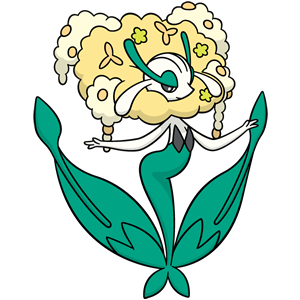
Hell, to use a random example, and one that is entirely subjective since everyone's experience with the game can be completely different, my Pokémon team is a perfect example of the things I want to champion and go into detail on the intricacies of why it works. Of the six members of the team, two are male, of which one is quite feminine in design and is not traditionally masculine in appearance or action, and the other that does look traditionally masculine in design shows affection far more and more deeply than is usually socially acceptable, while of the three females one is conventionally attractive and girly in appearance while only sort of girly in demeanour, one is rather pudgy and doesn't conform to the beauty standards usually socially enforced on women (though one does wonder how one would enforce female beauty standards on an electricity-generating rat monster) and is more outwardly powerful than the other two, and the third isn't as stereotypically girly as the first, and is quite androgynous, but is still 'pretty' in an aesthetic sense and is emotionally open.
Of course, it's a game about collecting and battling fantastical monsters, not a discourse on humanity and gender roles, but the fact that such a diversity of gender roles are there, even if not focused on, is exactly the kind of thing I want the dissertation to be about. The fact that it's a story about something completely different, but by just having these things there uncommented upon, showing that all of these things are acceptable ways to be, not sneered at for 'not being a real man', 'being an attention whore', 'being hysterical', they just are and that's okay. On top of all that, the sixth member is entirely genderless, showing that even asexuality and not feeling comfortable with gender binarism is okay too! The fact that just by collecting a bunch of random monsters in a video game to go fight other monsters, I've managed to concoct a team whose gender identities are more diverse, more progressive, and more interesting than some female characters who are not only the focus of a story, but the very narrator who we experience the story through. How did it manage to do that with so little focus on characterisation?
THAT is what I want to talk about.
Post Script:
I only realised afterwards that when writing the last dissertation post, I'd left off two examples I'd wanted to include. Of course, of the many, many examples I've listed here and previously, only a very select few will actually be included to any great extent, but for the moment I'm simply listing possibilities that need further exploring.
WataMote
The protagonist Tomoko is a very different type of character than we've seen previously, even in the world of anime which is female-led more often than Western entertainment is (granted, a lot of the time this is for fanservice purposes and Japan has a whole 'nother set of issues with portraying women, but that's another story, point is there's still far more visibility for female heroes in anime). She's a compete social outcast in a far more realistic sense than the traditional nerd. She's not unnaturally smart, she's not misunderstood, she doesn't obsess over a socially unacceptable hobby, she's just completely inadequate at socialising and doesn't fully grasp why she isn't fawned over and adored as the 'popular girl' of the class. I must admit, she reminds me of myself far too often and to a scary degree, but that's one of the main points of the show, to explore how this kind of behaviour doesn't get you popular, how her very twisted and idealised ways of expecting things to happen won't work in reality, and showing you all this as a form of self-study, thinking about to what extent this caricature actually reflects your own beliefs and actions, how to avoid her mistakes and make yourself a better person for it. She is a caricatured stereotype exaggerated and played for comic/tragic effect, but it's a stereotype so rarely explored with this feel of realism and relatibility, and certainly not with a female perspective.
Zero Dark Thirty
Not much to say about this one, beyond that the main character is one of these types of character for whom gender is unimportant, and how utterly miraculous that is to appear in a mainstream Hollywood product.
The PowerPuff Girls
This show is MADE of having some characters be completely comfortable in traditional gender roles, and others giving said roles the finger.



No comments:
Post a Comment